
A conference room where no one can hear the presenter. A retail store with uneven music levels. A restaurant where the screens never sync with the sound. These problems often trace back to poor planning during installation. Many businesses invest in expensive technology but struggle because the system was never designed properly. Choosing the right installer makes the difference between frustration and a seamless experience.
This guide explains exactly what to look for when hiring a professional for commercial audio video installation. By the end, you’ll know how to evaluate installers, avoid costly mistakes, and choose a partner who can build a system that works reliably every day.
Experience With Commercial AV Systems
Before looking at equipment or pricing, it’s helpful to understand the installer’s real-world experience. Not every technician who installs speakers or TVs has expertise in commercial AV systems. Commercial environments are very different from residential spaces. A conference room, restaurant, office lobby, or retail store requires careful planning to ensure sound coverage, screen visibility, and system reliability.
Experienced installers understand how to design systems that match business needs. They consider room acoustics, lighting conditions, and daily usage patterns before recommending equipment. This level of planning prevents common issues like echo, uneven sound distribution, or displays placed in awkward locations. When evaluating installers, ask about their previous projects and the types of businesses they’ve supported.
Strong Design and Planning Process
Once experience is confirmed, the next thing to evaluate is how the installer approaches system design. Good commercial AV installation begins long before equipment is mounted on walls or ceilings.
- Site evaluation first: Professionals visit the space to understand layout, acoustics, and lighting.
- Clear system blueprint: They create a plan showing equipment placement and wiring paths.
- Usage-focused design: Systems are built around how employees and customers will interact with technology.
- Future scalability: The design allows new devices to be added later.
- Network compatibility: AV equipment integrates smoothly with the business network.
- User-friendly control: Systems are simple for staff to operate.
Without this planning stage, systems often feel confusing or incomplete. A thoughtful design process ensures every component works together.
Expertise in Sound System Installation
After planning the overall system, sound quality becomes one of the most important technical factors. Many businesses underestimate how complex sound system installation can be.
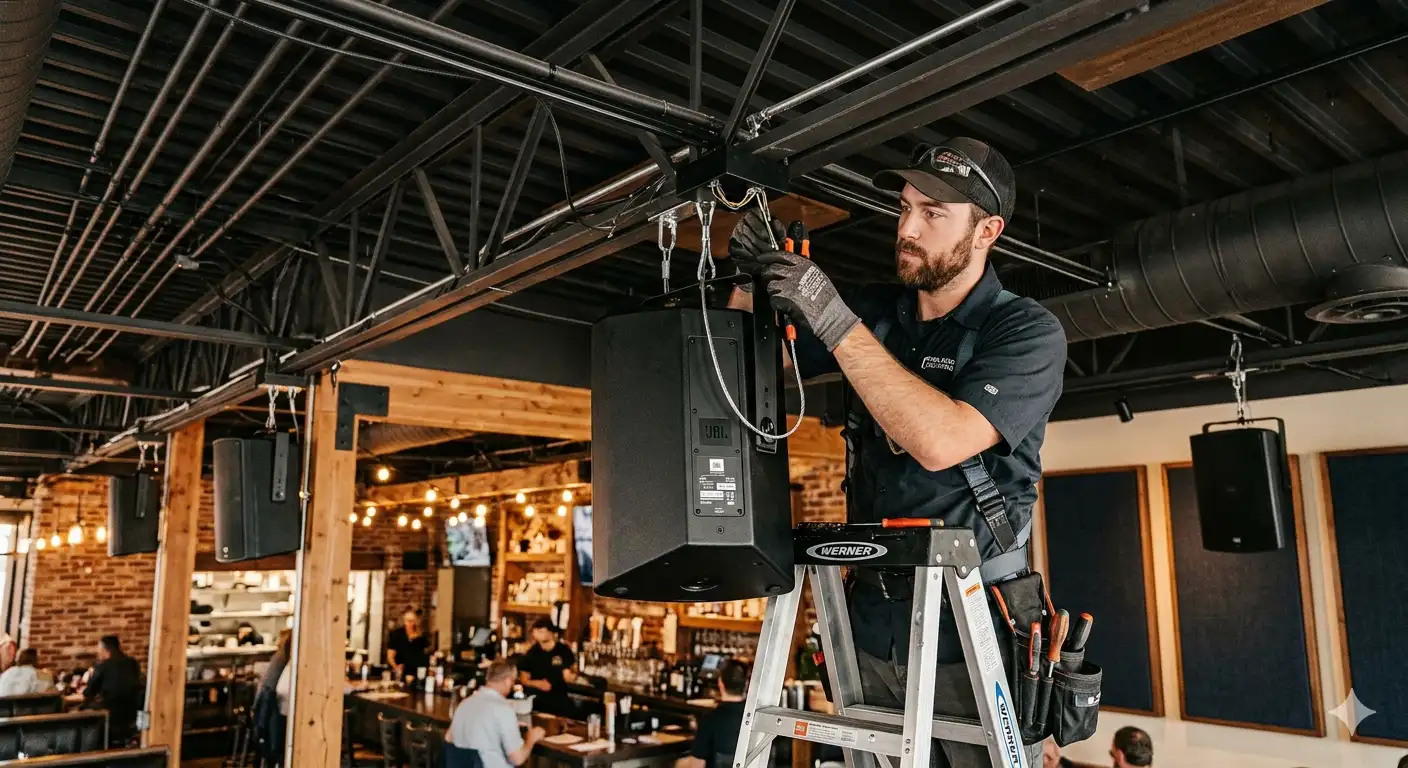
Speakers placed in the wrong locations can create uneven coverage. Some areas may sound too loud, while others remain difficult to hear. This becomes a problem in meeting rooms, restaurants, and retail spaces. Professional installers understand how to balance speaker placement, amplifier power, and room acoustics. They calculate coverage zones so sound feels consistent throughout the space.
Proper tuning also matters. A well-calibrated system avoids distortion and background noise while delivering clear speech and balanced music. This level of detail is what separates a professional installation from a basic equipment setup.
Knowledge of Integrated Audio Video Installation
Once sound is handled correctly, the next step is ensuring video systems work seamlessly with the rest of the setup. This is where strong audio video installation expertise becomes essential. Commercial environments often rely on multiple displays, presentation systems, and digital signage. Each component must communicate smoothly with the rest of the system.
Installers with integration experience can connect projectors, displays, microphones, and conferencing tools into one unified control platform. Staff should be able to start presentations, adjust sound, or switch inputs without technical confusion.
This integration also helps reduce cable clutter and unnecessary equipment. When everything works together through a central system, businesses gain a cleaner and more reliable technology environment.
Ability to Deliver Reliable Commercial AV Installation
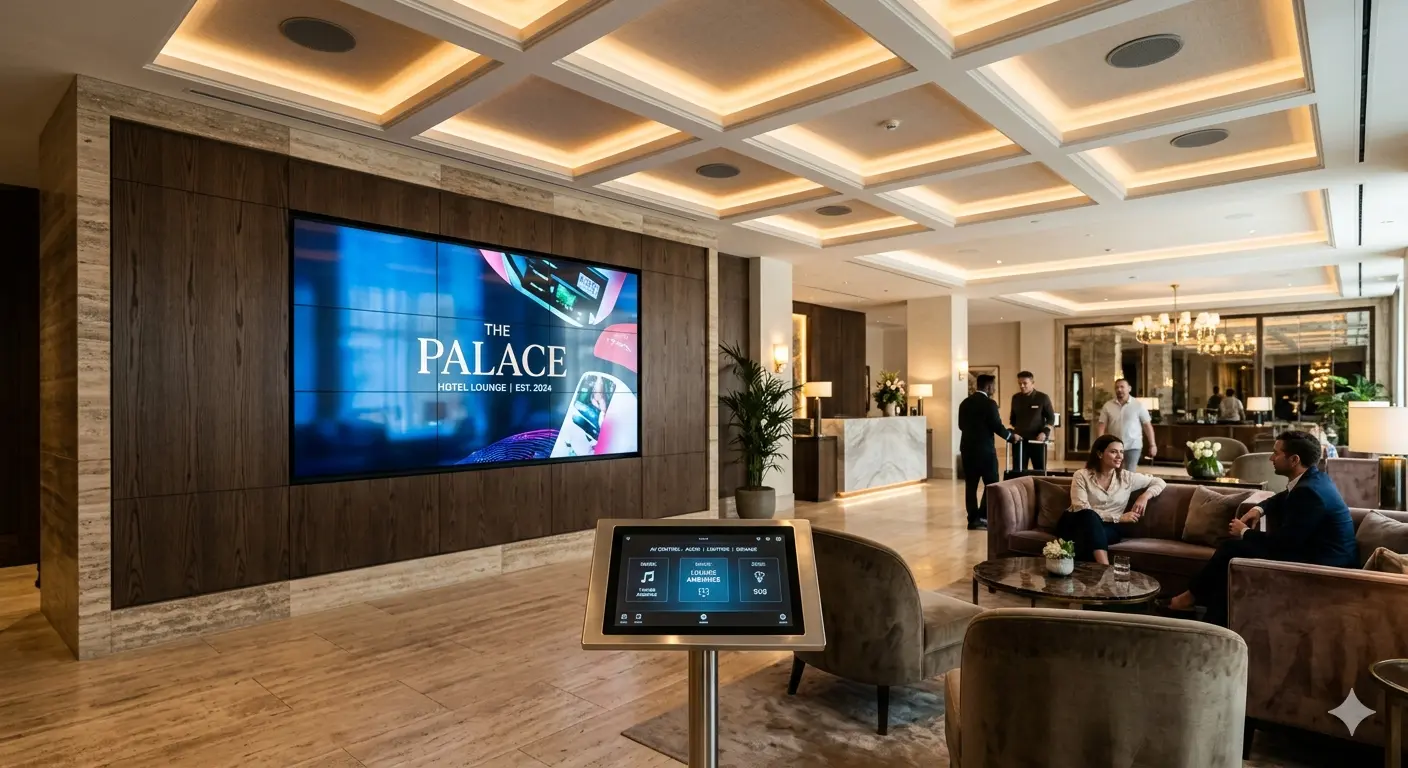
Even the best design and equipment can fail if the actual installation work isn’t handled carefully. Reliable commercial AV installation requires precision, attention to detail, and experienced technicians.
- Professional cable management: Wires are organized and hidden for safety and aesthetics.
- Correct mounting techniques: Displays, speakers, and projectors are installed securely.
- Signal testing: Every device is checked to ensure consistent audio and video quality.
- System calibration: Installers fine-tune settings for clear sound and sharp visuals.
- Clean installation practices: Workspaces remain organized during and after the project.
- Minimal business disruption: Installations are scheduled to avoid interfering with operations.
These details may seem small, but they determine whether the system works smoothly for years or requires constant troubleshooting.
Support, Training, and Maintenance
Once the installation is complete, the relationship with the installer shouldn’t end. Businesses rely on AV systems daily, so ongoing support becomes just as important as the initial setup. Good installers provide staff training so employees know how to operate the system confidently. Without this step, even well-designed systems can feel intimidating.
They also offer maintenance services and troubleshooting support. Technology occasionally needs updates, adjustments, or repairs, especially in high-traffic environments. Knowing that help is available when something goes wrong gives businesses peace of mind. Instead of scrambling to fix problems internally, they have a trusted expert ready to assist.
Transparent Pricing and Clear Communication
Finally, a trustworthy installer communicates openly about costs, timelines, and expectations. Transparency is essential when investing in commercial AV technology.
- Detailed proposals: Quotes clearly outline equipment, labor, and installation scope.
- Realistic timelines: Installers explain how long the project will take.
- No hidden costs: Pricing includes installation, configuration, and testing.
- Clear technical explanations: Complex AV concepts are explained in simple terms.
- Responsive communication: Questions are answered promptly during planning and installation.
- Long-term partnership mindset: Installers focus on building lasting business relationships.
This clarity helps business owners feel confident about their investment and prevents misunderstandings during the project.
The Bottom Line
Choosing the right installer can determine whether your AV system becomes a powerful business tool or an ongoing frustration. By focusing on experience, thoughtful design, sound quality, integration expertise, reliable installation, and long-term support, businesses can make a confident decision. A well-planned commercial audio video installation improves communication, enhances customer experiences, and supports daily operations.
For expert guidance, Ace Integrated Technologies helps businesses design and install reliable commercial AV systems tailored to modern workplaces.
FAQs
What is commercial audio video installation?
Commercial audio video installation involves designing and installing AV equipment such as speakers, displays, microphones, and control systems for businesses, offices, restaurants, and conference rooms.
What equipment is included in commercial AV systems?
Commercial AV systems may include speakers, amplifiers, projectors, digital displays, microphones, video conferencing tools, and centralized control systems for managing all devices.
How long does a commercial AV installation take?
Most commercial AV installation projects take a few days to several weeks, depending on system size, building layout, and the complexity of audio and video equipment.
Why is professional sound system installation important?
Professional sound system installation ensures proper speaker placement, balanced audio coverage, and clear sound quality throughout a business space.
What industries use commercial AV systems?
Many industries rely on commercial AV, including corporate offices, retail stores, restaurants, hotels, educational institutions, and entertainment venues.