
Modern businesses rely on technology to create better customer experiences, improve communication, and support daily operations. However, many companies underestimate the true cost of installing commercial audio-video systems in Southlake, TX. What looks affordable at first can quickly become expensive when hidden fees, outdated equipment, and poor planning enter the picture.
From conference rooms to retail stores and restaurants, integrated AV systems require more than screens and speakers. Business owners must think about wiring, scalability, maintenance, and long-term performance. Understanding these hidden costs helps you make smarter investments and avoid frustrating surprises later.
| The hidden costs of commercial audio-video Southlake, TX projects often include outdated infrastructure upgrades, poor system integration, maintenance expenses, software licensing, scalability limitations, and installation mistakes. Businesses can reduce long-term costs by choosing professional integrated audio-video solutions designed for reliability, future expansion, and seamless performance. |
Cheap AV Installations Often Become Expensive
Many businesses choose low-cost AV setups to save money upfront. Unfortunately, these systems often fail to deliver long-term value. Inexpensive equipment may lack durability, compatibility, or support, leading to expensive repairs and upgrades within a short period.
A poorly designed audio-video system in Southlake, TX project can also create workflow problems. Employees struggle with unreliable conference room systems, poor sound quality, or inconsistent video performance. These issues reduce productivity and create frustration during important meetings or presentations.
- Low-quality hardware fails faster: Budget speakers, displays, and control systems often wear out quickly under daily commercial use, forcing businesses to spend more on repairs and early replacements.
- Poor integration increases downtime: Cheap systems frequently suffer compatibility problems between devices, causing meeting interruptions, communication failures, and reduced employee efficiency across daily business operations.
- Limited scalability creates future expenses: Entry-level setups rarely support business growth, making companies replace entire systems instead of upgrading smaller components when operational needs expand.
The Cost of Poor System Integration
Integrated audio-video systems should work together smoothly. When displays, speakers, conferencing tools, and automation systems fail to communicate properly, businesses lose both time and money.
Many companies install equipment from different brands without considering compatibility. This often results in unstable performance and complex troubleshooting. Employees waste valuable time trying to operate systems that should simplify communication.
Hidden Compatibility Problems
Different AV brands may use different software ecosystems and communication protocols. Without proper planning, devices may not sync correctly or may require expensive third-party adapters. These hidden costs often appear after installation, leaving businesses frustrated with unexpected expenses.
Staff Training and Operational Delays
Complex systems require additional employee training when interfaces are inconsistent or difficult to use. Businesses lose productivity while teams learn confusing controls or troubleshoot recurring technical problems. Simple, user-friendly integration reduces these operational delays significantly.
Infrastructure Upgrades Most Businesses Forget
Older buildings in Southlake may not support modern commercial AV systems without upgrades. Many businesses discover infrastructure issues only after installation begins, which increases labor costs and project delays.
Companies planning home video distribution in Southlake, TX, or commercial media distribution systems should also evaluate bandwidth requirements. High-resolution video demands stronger network capacity to avoid buffering and lag.
- Outdated wiring increases installation complexity: Older buildings may require rewiring to support modern AV systems safely and efficiently, adding unexpected labor costs and extending project timelines significantly.
- Weak internet infrastructure limits performance: Commercial video conferencing and streaming systems depend on stable network connections, making network upgrades essential for smooth communication and uninterrupted daily operations.
- Electrical limitations create safety concerns: Advanced displays and sound systems require reliable power distribution, and overloaded circuits can damage expensive equipment or create ongoing maintenance issues.
Maintenance Costs That Add Up Over Time
Commercial AV systems require regular maintenance to perform properly. Businesses that ignore maintenance often experience equipment failures during important meetings or customer interactions.
Software Subscription Expenses
Many modern AV systems rely on cloud-based platforms and software subscriptions. Video conferencing tools, automation platforms, and security updates may require monthly or yearly licensing fees. These recurring costs should always be included in long-term budgeting plans.
Emergency Repairs Cost More
Unexpected equipment failures often require urgent technical support. Emergency service visits and replacement parts typically cost more than scheduled maintenance. Preventive service plans help businesses reduce these sudden financial burdens.
Scalability Problems Can Force Full System Replacement
Businesses grow, and technology needs to change quickly. Unfortunately, some AV systems are designed only for immediate needs without considering future expansion.
A business may initially install a small conference room system but later require additional displays, wireless collaboration tools, or advanced automation features. If the original system lacks scalability, replacing the entire setup becomes necessary.
Professional integrated audio-video providers design systems with flexibility in mind. Modular systems allow businesses to upgrade components gradually instead of rebuilding everything from scratch.
Scalability is especially important for companies opening additional locations or expanding office space. Future-ready systems reduce long-term expenses and improve operational consistency across multiple environments.
Why Professional Installation Protects Your Investment
Commercial AV systems involve much more than plugging in equipment. Proper installation affects system reliability, safety, and long-term performance.
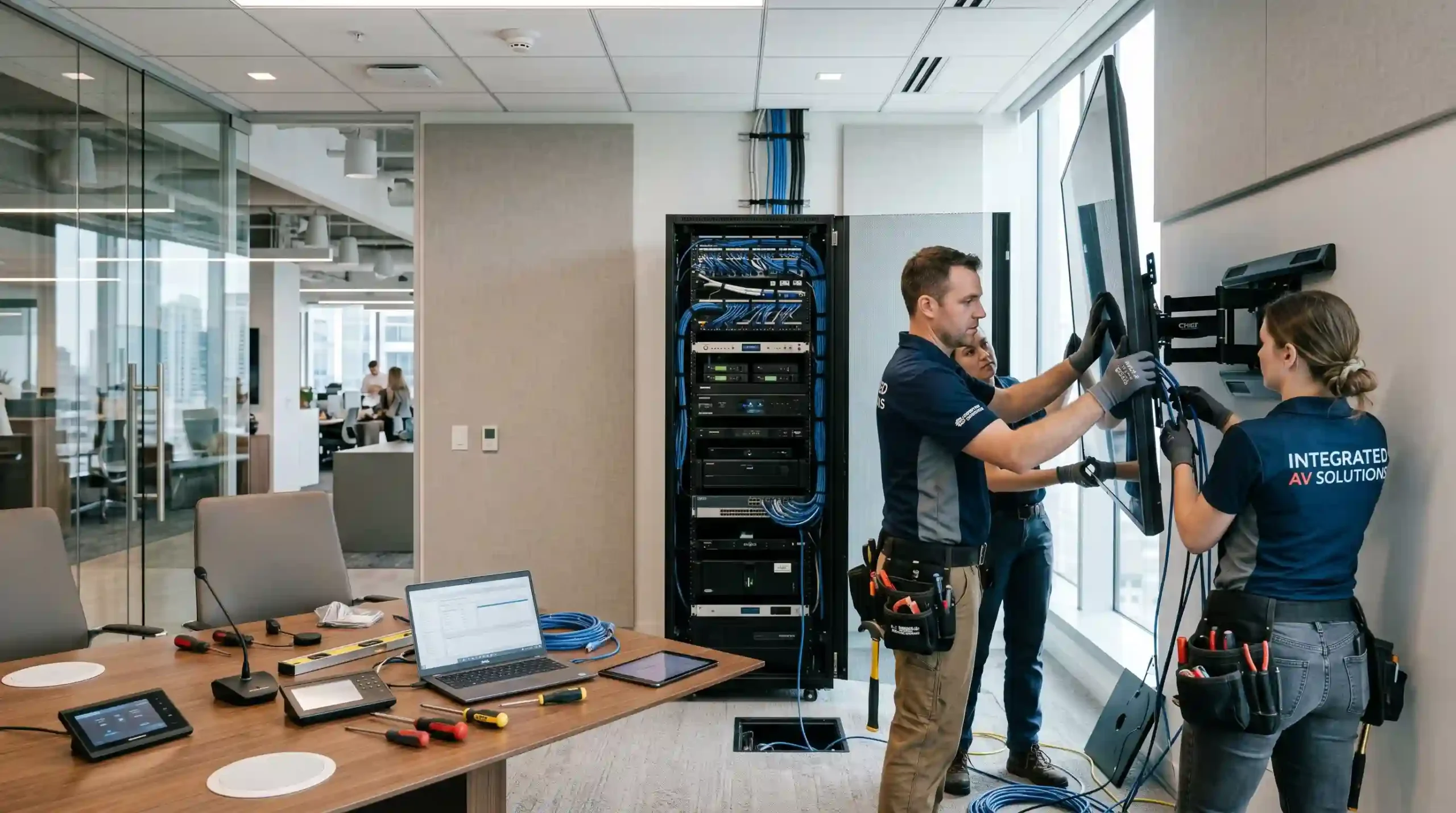
Experienced installers understand acoustics, lighting conditions, cable management, and user experience. They ensure displays are positioned correctly, speakers deliver balanced sound, and systems operate efficiently across different environments.
Businesses investing in home theater installation in Southlake, TX, or commercial entertainment spaces also benefit from professional calibration. Proper tuning improves audio clarity, screen visibility, and overall customer experience.
Professional installation also reduces liability risks. Incorrect mounting, poor wiring, or unsafe electrical work can lead to equipment damage and safety hazards. Certified technicians help businesses avoid these costly problems.
- Professional calibration improves system performance: Expert tuning enhances sound clarity, display visibility, and communication quality, helping businesses create more professional and reliable customer and employee experiences.
- Correct installation reduces future repairs: Proper cable management, ventilation planning, and secure mounting prevent equipment damage and lower long-term maintenance expenses significantly.
- Expert planning supports future upgrades: Professional installers design systems that adapt easily to changing technology needs, reducing expensive reconstruction and replacement costs later.
How to Budget Smarter for Commercial AV Projects
Businesses should approach AV projects strategically rather than focusing only on initial pricing. Long-term reliability, maintenance, scalability, and operational efficiency matter just as much as hardware costs.
Start by identifying business goals. A conference room requires different solutions than a retail showroom or restaurant entertainment system. Clear objectives help avoid unnecessary purchases and costly redesigns later.
Working with experienced integrated video and sound services providers also improves budgeting accuracy. Professional consultations reveal infrastructure requirements, compatibility concerns, and future expansion opportunities before installation begins.
Businesses should request detailed proposals that include equipment, labor, maintenance, software licensing, and support costs. Transparent planning prevents unexpected financial surprises during the project lifecycle.
Final Thoughts
The true cost of commercial audio-video systems in Southlake, TX goes far beyond screens and speakers. Poor integration, outdated infrastructure, maintenance issues, and limited scalability can create major long-term expenses. Investing in professionally designed integrated audio-video solutions helps businesses avoid hidden costs while improving performance, reliability, and customer experience.
Partnering with experienced AV professionals of Ace Integrated Tech ensures smarter technology decisions that support business growth.
FAQs
What is included in a commercial audiovisual system?
A commercial AV system typically includes displays, projectors, speakers, microphones, control systems, video conferencing tools, networking equipment, and automation technology. The setup depends on the business environment, such as offices, restaurants, retail stores, or conference spaces.
Why do commercial AV projects exceed budget estimates?
Commercial AV projects often exceed budgets because businesses overlook infrastructure upgrades, wiring requirements, software licensing, maintenance plans, and compatibility issues. Unexpected labor costs and future scalability needs can also increase total project expenses significantly.
How long does a commercial AV system last?
A professionally installed commercial AV system can last between 7 and 10 years with proper maintenance. Regular software updates, preventive servicing, and scalable system design help extend equipment lifespan and improve long-term performance.
Why is integrated audio video important for businesses?
Integrated audio video systems simplify communication, improve collaboration, and create consistent user experiences. Businesses benefit from centralized control, smoother meetings, better customer engagement, and fewer technical disruptions during daily operations.
How can businesses reduce hidden AV installation costs?
Businesses can reduce hidden costs by working with experienced AV professionals, planning for scalability, evaluating infrastructure early, and choosing reliable equipment. Detailed project planning prevents expensive redesigns, downtime, and emergency repairs later.