
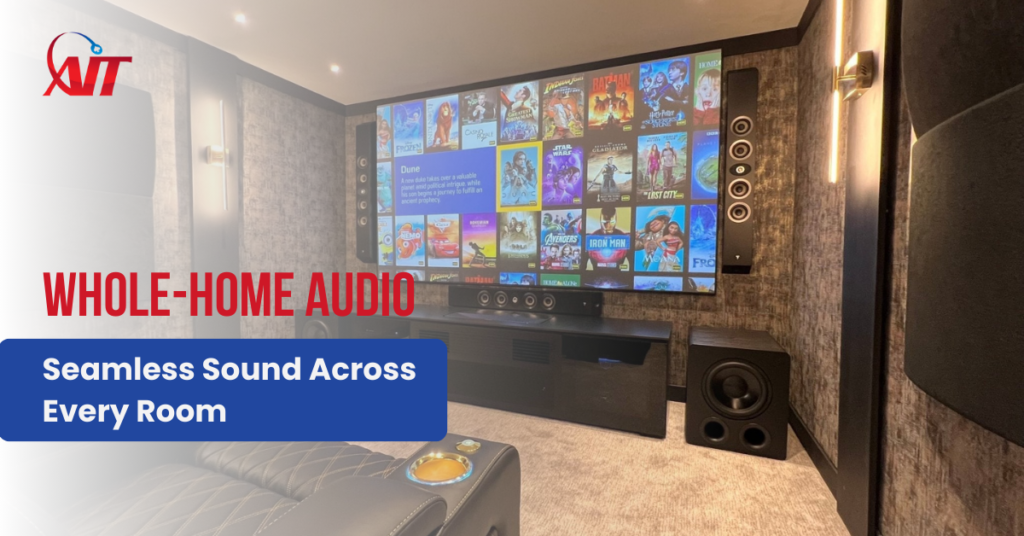
Have you ever tried to play music in one room, only to hear it fade or lag in another? Many homeowners struggle with fragmented sound systems, tangled wires, and complicated setups that make enjoying music at home more frustrating than relaxing. That’s where whole-home audio comes in.
This blog will guide you through wireless and distributed audio solutions that bring consistent, high-quality sound to every room, without the headache of messy wiring. From multi-room audio setups to smart home control and cable-free installation options, you’ll learn how to create a seamless audio experience that feels effortless. Let’s explore how to upgrade your home’s sound system intelligently.
Understanding Whole-Home Audio
Before diving into setups, it’s helpful to understand what makes whole-home audio different from a traditional stereo or speaker system. Unlike isolated speakers, whole-home audio brings music seamlessly to multiple rooms, ensuring every space gets consistent, high-quality sound.
Whether you’re hosting a party or enjoying quiet background music while cooking, distributed sound elevates your home experience. This type of system works by connecting a central hub or amplifier to multiple speakers throughout your home. Some systems rely on wiring, while others use wireless connections to reduce clutter and make installation simpler.
Distributed Audio Solutions Explained
Distributed audio solutions allow a single source of music to be shared across several rooms. For example, you can play the same playlist in your living room, kitchen, and bedroom, all synchronized perfectly. Wired systems may require professional installation but offer rock-solid reliability. Wireless solutions, on the other hand, provide flexibility, making it easier to move speakers or expand your system later.
Why Multi-Room Audio Setup Matters
A multi-room audio setup isn’t just a luxury; it’s practical. You can enjoy the same playlist in every corner, or play different music in separate rooms, depending on the mood or activity. Imagine cooking with upbeat tunes in the kitchen while the kids have calming background music in the playroom. Multi-room setups make that possible, and they integrate perfectly with smart home control for effortless management.
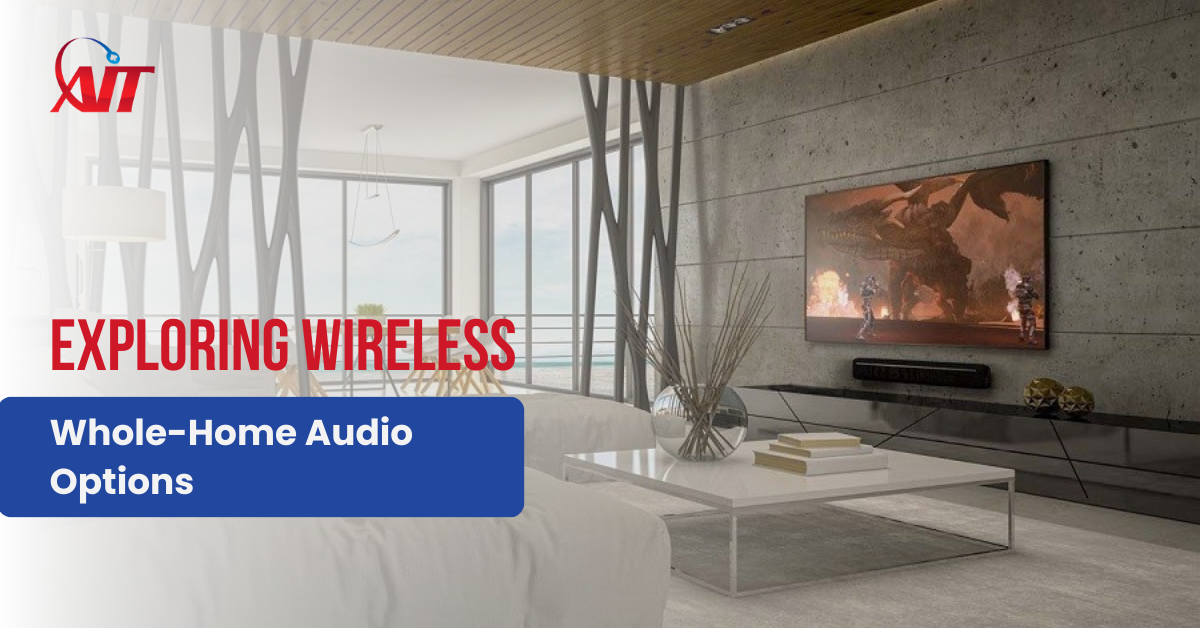
Exploring Wireless Whole-Home Audio Options
Once you understand the concept, wireless whole-home audio offers a simple way to avoid complicated wiring. Wireless speaker systems are easy to install, versatile, and can expand over time as your needs change. They rely on Wi-Fi or Bluetooth connections, so you can place speakers wherever they fit your home’s layout.
Smart Home Control Integration
Smart home control takes your audio experience to the next level. With apps or voice assistants like Alexa, Google Assistant, or Apple HomeKit, you can manage music across rooms, adjust volume, and even create custom zones for different times of day. Pairing lighting or climate control with your audio system enhances the ambiance automatically. For example, starting a “movie night” scene could dim the lights, close motorized shades, and cue your surround sound, all with a single command.
Cable-Free Audio Installation Tips
One of the biggest advantages of wireless systems is cable-free installation. You don’t have to worry about running speaker wires through walls or ceilings. Instead, focus on optimal speaker placement: corners may boost bass, while central positions improve clarity. Keep speakers away from interference, like routers or microwaves, to maintain crisp sound. Wireless systems also make it easy to expand your setup and add more speakers in future rooms without needing a full rewire.

Choosing the Right Home Audio Streaming Options
After picking your system, you’ll need the right streaming method to ensure smooth playback throughout the house. Popular platforms like Spotify Connect, Apple AirPlay 2, or Bluetooth multi-room setups can deliver high-quality audio to all your speakers at once. Choosing a platform compatible with your devices ensures seamless control and reliable playback.
Examples of Streaming Setups
Consider streaming a single playlist across your home during a party. Using Spotify Connect, your living room, kitchen, and patio speakers can all play in perfect sync. For quieter moments, AirPlay 2 allows you to send music to select rooms only. Bluetooth options work well for casual setups, but Wi-Fi streaming generally provides better reliability for distributed audio solutions.
Tips for a Seamless Multi-Room Audio Setup
Knowing your system type and streaming options leads naturally to setup best practices. Proper placement is key: balance speakers in each room for even sound, and create zones that make sense for your lifestyle. Kitchens, living rooms, bedrooms, and offices can all be controlled independently or together, depending on your needs.
Expanding Your System Gradually
Start small if you’re unsure. You can add speakers to more rooms over time, testing each setup for sound quality and coverage. This approach prevents overcomplicated installations while allowing you to enjoy your music immediately. Wireless speaker systems make scaling easy without needing professional rewiring.
The Bottom Line
Upgrading to whole-home audio transforms your home into a connected, immersive sound environment. With wireless audio, smart home control, and multi-room setups, enjoying music anywhere is simple and cable-free. By understanding your options and following practical tips, you can create a seamless audio experience that grows with your lifestyle.
Discover more whole-home audio solutions and expert guidance at Ace Integrated Technologies to upgrade your home today.
FAQs
1. What is whole-home audio and how does it work?
Whole-home audio is a system that distributes music evenly across multiple rooms in your house. Instead of using isolated speakers, it connects a central hub, amplifier, or wireless network to speakers placed throughout the home. This allows you to play the same music everywhere or different audio in separate rooms, all perfectly synchronized.
2. What is the difference between wired and wireless whole-home audio systems?
Wired systems use physical speaker cables connected to a central amplifier, offering strong reliability and consistent performance. Wireless systems use Wi-Fi or Bluetooth to stream music without running cables through walls. Wireless solutions are easier to install and expand, while wired setups may provide slightly more stability for larger homes.
3. Can I control multi-room audio with my smartphone or voice assistant?
Yes. Most modern systems integrate with smart home platforms and apps. You can control volume, select rooms, switch playlists, or create custom audio zones using your smartphone or voice assistants like Alexa, Google Assistant, or Apple HomeKit. This makes managing your home audio simple and convenient.
4. What are the best streaming options for whole-home audio?
Popular streaming options include Spotify Connect, Apple AirPlay 2, and Wi-Fi-based multi-room systems. Wi-Fi streaming generally offers better sound quality and synchronization compared to Bluetooth. The best choice depends on the devices you already use and your preferred music platform.
5. Is wireless whole-home audio difficult to install?
No. Wireless systems are designed for easy, cable-free installation. You don’t need to run speaker wires through walls or ceilings. Proper speaker placement and a strong Wi-Fi connection are key to achieving clear, balanced sound. Many homeowners start with a few rooms and gradually expand their system over time.